


Menu
Close X
Menu

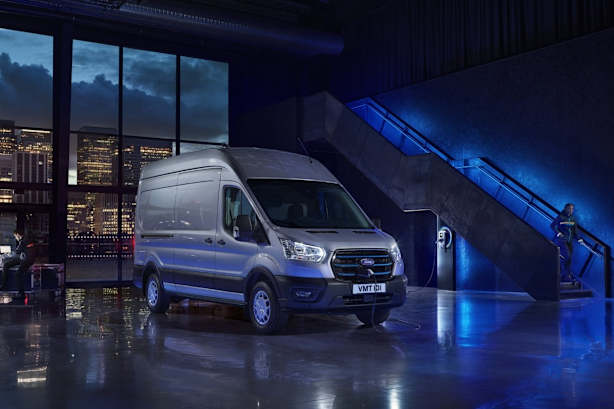
The Ford E-Transit delivers the trusted toughness, capability and versatility of Transit with the benefits of fully electric power.
Built to help businesses meet sustainability goals without compromising performance, it combines advanced technology with practical capability, offering up to 15.1 cu.m of loadspace, 1,745 kg maximum payload, 430 Nm of torque, and Pro Power Onboard (2.3 kW) for powering tools and equipment on the go.
Available with standard or enhanced battery options, E-Transit offers a range of up to 249 miles, with 10–80% DC fast charging in as little as 28 minutes.
With multiple configurations including L2, L3 and L4 wheelbases, H1, H2 and H3 roof heights, and panel van, double cab-in-van and chassis cab body styles, it’s designed to suit everything from heavy multi-drop routes to longer-distance operations.
Ready to experience the E-Transit for your business? Book a test drive or request a call back from our team to learn more.
As a Ford electric vehicle owner, you’ll have a broad range of home, work depot, and public charging options available.

Under the Ford Pro Power Promise; when you purchase a new E-Transit van, you get:
• A Free Home Charger
• An8-year or 100,000 mile battery warranty
• 2-years FREE roadside assistance
• 12 months FREE vehicle management software
• Dedicated Ford Pro Aftercare Support, with 24/7 Ask Ford digital assistant
Giving you everything you need to make the switch. T&C's Apply.
Depot
Working with our partners, we can help install all your charging hardware and software. With a charging point on your premises, you can charge you E-Transit from 0-100% in approximately8-12 hours.
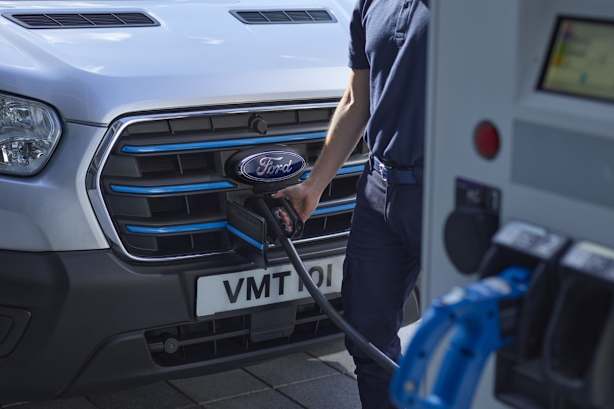
PUBLIC
Charging your E-Transit at a public charging station is effortless. The BlueOval Charge Netwrork x Octoous Electroverse has 1,000,000 cahring points across Europe, including IONITY.